

Needless to say, one of the most important storylines of the year 2026 in MLB is, as expected, Shohei Ohtani. Like every one of his MVP seasons, he gives us something different.
- MVP Year 1 (2021): Joe Maddon and the Angels remove the shackles; he breaks out for 46 HR and 4.9 rWAR offensively, with a 9-2 record and 4.1 rWAR on the mound.
- MVP Year 2 (2023): He establishes himself as the best hitter in baseball with 44 HR and 6.1 rWAR (in an injury-shortened year for Judge) and a 10-5 record with 3.8 rWAR on the mound.
In Year 1, he kept the “tuner” somewhere in the middle. In Year 2, he favored offense.
- MVP Year 3—his first Dodger season and strictly as a DH—he dismantled the league to the tune of a 9.0 rWAR and its first 50/50 season (54 HR/59 SB).
- MVP Year 4 saw him favor offense again while rehabbing, solidifying himself as the premier power bat in the NL with 55 HR and a combined 7.7 rWAR.
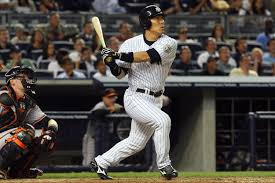
This season is Ohtani’s first fully healthy year as a pitcher in three years. Shohei has always been a man of lofty goals; he understands his place in history and the historical limitations of players from Japan. Before Shohei, the most potent power season from a Japanese player or any Asian player in MLB was Hideki Matsui’s 2004 (31 HRs). Shohei extended that production by nearly 75%.
Yet, an unusual quirk remains: the lack of a Japanese or Asian Cy Young winner. Yu Darvish finished second twice; Iwakuma finished third; Maeda got second in the COVID year in addition to an excellent Chien Min Wang in 2006. Even with Yamamoto and Ryu’s recent top finishes, the award remains elusive.

Shohei Ohtani wants to do what no man has done, period. However, this season’s focus has been decidedly on pitching. With 20% of the season played, he is at just a 135 OPS+, his lowest since 2020. He is on pace for 28 home runs—nearly half of last year’s total. While his pitching has been spectacular (an NL-leading 0.97 ERA), his offensive production is sorely missed. Is Shohei in the midst of a selfish pursuit of an individual award the Dodgers don’t strictly need? Is this the leeway the Dodgers give him for his $2 million upfront payroll cost and off the field revenue generating machine?

For those unfamiliar with NPB or Japanese baseball or yakyu history, the vaunted home run mark has always been 55. Sadaharu Oh set it in 1964, and it stood until Murakami’s 56-HR Triple Crown season in 2022. Controversially, a player in the NPB has broken Oh’s homerun mark. That would be the Curacaoan slugger, Wladimir Balentien, who hit 60 in 2013. Famously, two others came up just short, African American Tuffy Rhodes with 55 in 2001 and Venezuelan Alex Cabrera in 2002 with 55. Western observers love to nitpick the fact it is a tainted record because the Japanese don’t want a foreigner or gaijin to break Oh’s record, but Oh is actually a foreigner too; Taiwanese to be exact.
Shohei’s 55 home runs last year was spectacular not just because it updated his Dodgers franchise record, but stopped equal to Oh’s over 60 year old mark and just short of Murakami’s new standard of 56. Lost on most the Western media is the symbolism of 55. Remember, Hideki Matsui wore number 55 most of his career because of the prestige of that record and his senpai, Sadaharu Oh. Matsui had the last Japanese 50 homerun season before Murakami in 2002, his last NPB season. Murakami himself wore the number 55 on the Yakult Swallows because of Matsui and Oh’s reputation. Perhaps, he should have changed it once he broke the record; maybe he had already started his exit plan for America. Upon his signing with the Chicago White Sox, he has simply gone with the number 5, a nod to his previous number. Leading the league currently in homeruns, he is on pace for over 60. It remains to be seen what Ohtani’s response to Murakami’s success and possible overtake of his MLB mark. If Shohei doesn’t get his desired Cy Young, will he redirect to the home run record ( I guess Aaron Judge’s 2022 AL mark of 62 is the unofficial non PED record)? Will he feel jealousy if Murakami surpasses his MLB mark? What kind of player does Shohei want to become? When most people zig, Shohei tends to zag. As the great Tom Verducci has written in his April 17, 2018 Sports Illustrated Article, the “da Vinci of ballplayers,” the baseball renaissance man. Verducci further expanded his praise of Shohei as “baseball’s Houdini,” the great entertainer and escape artist who never lets the world know his next move after his spectacular 50/50 “one-way” runaway MVP season, a historical first for a DH all while rehabbing his throwing arm. What great figure will Shohei embody next or is he just chasing personal hardware right now? Has he pushed the “tuner” of his baseball talents this year in favor of pitching for the vaunted Japanese Cy Young?
Leave a Reply